
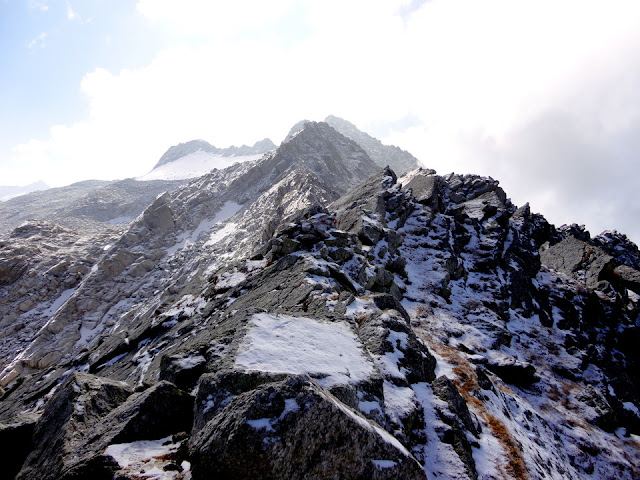
Introduction:
There are two ways to go on a trek in India: either you buy a package from a trekking company or you take the risk of going it alone. Independent trekking is constantly advised because it is a riskier way to interact with nature. The advantage of taking a package is that you won’t have to stress about logistics or other things like mules, guides, tents, etc. Everything has been organized by the organizer
To sign up for the trek and pay the required amount, you simply need to wait for the dates. You will have to arrange a guide, food, tents, etc. Trekking by yourself can provide you with a singular experience and a true sense of adventure that you cannot obtain by trekking with any community or organization. Undoubtedly, it is a challenging task that requires some effort, but as the saying goes, “efforts make the destination more beautiful.” It is also less expensive than going withUnless you are not going on any adventure, you can join any trekking group.
Magnificent Beauty of Indrahar Pass
Indrahar Pass Trek is a high pass located 14,245 meters above sea level in the Himalayas of Himachal. Between the districts of Chamba and Kangra, it acts as a border. The starting and finishing points of this trek are in Mcleodganj, a neighborhood outside of Dharamshala.
The trail travels through made-up places like Triund, Ilaga Pass, and Lahesh Caves. Indrahar Pass is a popular destination for tourists of all ages because of its breathtaking beauty.
What location is the Indrahar Pass Trek?
At a height of 4342 meters (14245 feet), Indrahar is a mountain pass in the Dhauladhar range of the Himalayas. The pass, which is renowned for its hiking trails, primarily acts as a border between Chamba and Kangra, two illustrious Himachal Pradesh districts. A trek to Indrahar Pass is best done between May and October.
The Trek-related
Indrahar Pass is a mountain pass that starts in the Kangra region’s McLeod Ganj and is situated in Himachal’s Dhauladhar range. The Indrahar Pass trip is a longer version of the well-known Triund trip, which you may be familiar with. The route passes through the Triund and Lahesh Caves.
While winding through Dharamshala’s forest, the mysterious Indrahar Pass provides a breathtaking view of the imposing Dhauladhar Range of the Himalayas. The Indrahar pass, which separates the Kangra and Chamba regions, is situated at a height of 4,342 metres above mean sea level.
Highlights of the Trekking Tour to Indrahar Pass
- There are numerous views of the Pir Panjal and Dhauladhar mountain ranges.
- View notable peaks like Moon (4666 m), Arthur’s Seat (4525 m), and others.
- A hotel, inn, or campground overnight
- Observe the beautiful Chamba Valley.
Knowledge and facts:
The journey’s difficulty level ranges from moderate to problematic.
As you get further from Ilaqa Pass, it gets fiercer. In order to build up your muscles and improve your endurance, it would be best if you started working out around 14 days prior to the trip’s dates.
Exercise for your legs and thighs is essential because moving around usually involves using your legs a lot. If, against all odds, the legs disappear, everywhere.
Yoga postures like “kapalbhati” and “anulom vilom,” for instance, are suggested so that you won’t have any breathing problems at higher altitudes.
For this trip, no special authorizations or grants for timberland are anticipated.
Ideally, you should go when:
The journey should be possible in any month. If you want to see snow, go during the long months of March through June, and if you want clear skies, go during the long months of September through November. The route becomes elusive and avalanches are more likely during these months, so it is advised against traveling during stormy weather. Additionally, you wouldn’t get any picturesque views because it is frequently shaded.
Environmental elements
In the spring and summer, the temperature in the Indrahar Pass varies by 10 to 15 degrees Celsius. As a result, the spring will be a little chilly and the summer will be wonderful. During the summer, the trip trail is mostly situated in a meadowy area with stray stones. Summer is the ideal time to visit the Indrahar Pass if you enjoy working out in that kind of setting. The pass is significantly inverse in the winter compared to the summer. The temperature drops and the weather turns chilly below zero degrees. Experiencing Off-Road ATV
Adorable fact
The Dhauladhar range experiences the strongest pull of the Indian subcontinent plate on the Eurasian plate. Being a prominent Himalayan range, it is one of those natural places where you can observe the geological model in action.
Conclusion:
The Indrahar Pass is one of the most magnificent and well-known treks in the Dhauladhar range of mountains in the outside Himalayas. Usually a difficult trek, the pass offers the most breathtaking views of the high Himalayan peaks of the Pir Panjal’s range of the central Himalayas on one side and the breathtaking Kangra valley on the other. In the early rainy season, there is little snow and ice on the path to the pass (April to June).